


Table of Contents
- Custom Jewelry vs Mass-Produced: Key Differences at a Glance
- What Defines Mass-Produced Jewelry
- Understanding Custom-Designed Jewelry
- How to Identify Mass-Produced Jewelry
- Quality, Materials, and Craftsmanship Compared
- Benefits of Custom Jewelry for Sentimental Gifts
- Cost of Custom Jewelry vs Retail: What You're Really Paying For
- Durability, Resale Value, and Long-Term Considerations
Last Updated: August 5, 2026
Custom Jewelry vs Mass-Produced: Key Differences at a Glance
Custom jewelry offers handcrafted details tailored to your vision, while mass-produced jewelry delivers affordability and instant availability. Understanding these tradeoffs helps you make a decision aligned with what matters most to you.
What Defines Mass-Produced Jewelry
Mass-produced jewelry refers to pieces manufactured at scale using standardized designs and industrial processes. Designs are finalized once, then replicated hundreds or thousands of times using molds and casting equipment, minimizing labor per piece. The result is consistent, predictable output where every ring or necklace from a given line looks identical.
Mass-produced jewelry typically uses standardized materials: gold-plated options (a thin layer of gold over base metal), sterling silver, or solid gold in common alloys. Gemstones are selected for cost-effectiveness rather than individuality. The distribution model is built for speed and scale, large retailers stock inventory, and pieces ship within days.
Understanding Custom-Designed Jewelry
Custom-designed jewelry is created specifically for one person based on their preferences, measurements, and vision. You collaborate with an artisan or designer to bring a unique piece to life through consultation, design, and creation.
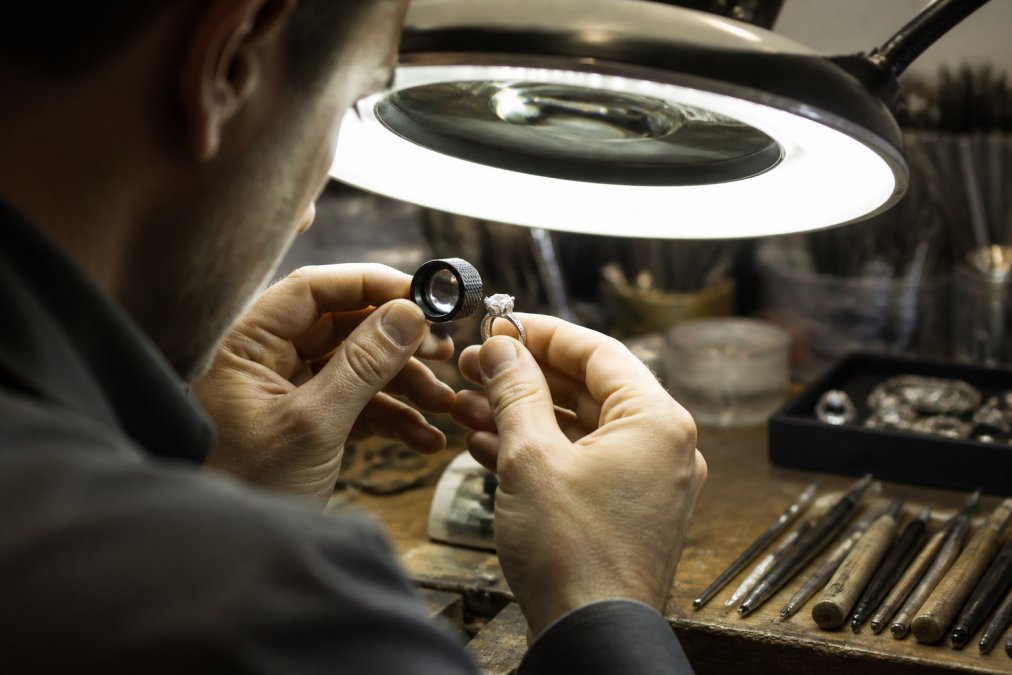
Custom jewelry emphasizes bespoke craftsmanship. Artisans work with precision tools and traditional techniques, examining each element closely. A custom ring might feature hand-set gemstones where each stone is individually secured, or engraving tailored to your exact specifications. Materials are often chosen for quality and longevity, ethically-sourced gemstones, higher-grade precious metals, or recycled materials based on your values.
The timeline for custom jewelry is longer, typically weeks or months depending on complexity, reflecting the personalized nature of the work.
How to Identify Mass-Produced Jewelry
Spotting mass-produced jewelry comes down to recognizing the hallmarks of standardized manufacturing.
Identical Design Replication
Mass-produced pieces look exactly the same across multiple units. If you see the same necklace in five different stores with zero variation, it's mass-produced. Custom pieces have unique details, even when two people order "similar" designs.
Visible Seams and Mold Lines
Industrial casting leaves traces. Look at the back or underside of a piece for visible seams or faint lines where mold halves met. Handcrafted jewelry is finished to remove these marks; mass-produced pieces often leave them visible to save labor costs.
Uniform Gemstone Appearance
Mass-produced jewelry uses standardized stones that all look alike. Custom pieces often feature stones with individual character, slight color variations, or unique inclusions.
Lightweight Feel
Many mass-produced pieces use gold plating or hollow construction to keep costs down. A ring that feels surprisingly light for its size likely has minimal precious metal content. Custom jewelry tends to have substantial weight because it uses solid materials throughout.
Generic Hallmarks and Maker's Marks
Mass-produced jewelry displays generic stamps indicating material (14K, 925, etc.) but no personalized maker's mark. Custom pieces often bear the jeweler's signature or mark, indicating individual craftsmanship.
Limited Customization Options
Mass-produced retailers offer "personalization" through engraving on pre-made pieces. True customization, changing materials, modifying the design, sourcing a specific stone, isn't available.
Quality, Materials, and Craftsmanship Compared
The quality difference between custom and mass-produced jewelry shows up in materials, construction, and longevity.
Material Grade and Sourcing
Mass-produced jewelry often uses lower-grade materials to keep costs down. Gold-plated pieces have only a thin veneer of gold over base metal, which wears away with regular wear. Gemstones are selected for cost, not rarity or beauty.
Custom jewelry prioritizes material integrity. A jeweler working on a bespoke piece will source solid gold or platinum, not plating. Gemstones are hand-selected for color, clarity, and character. If you want ethically-sourced stones or recycled metals, a custom jeweler can accommodate that.
Craftsmanship and Detail
Mass-produced pieces are made to a specification with the goal of consistency. Hand-setting gemstones is rare because it's labor-intensive. Most mass-produced pieces use prong or bezel settings applied mechanically.
Custom jewelry showcases artisanal craftsmanship. A jeweler hand-sets each gemstone, examining the stone and setting together to ensure perfect alignment. Finishing is meticulous, with edges polished and surfaces refined.
Durability and Longevity
A mass-produced gold-plated ring will show wear within months of regular use. These pieces are designed for short-term wear, not heirloom quality.
Custom jewelry made from solid precious metals and properly constructed is built to last generations. Solid gold doesn't wear away. Well-set gemstones stay secure. If a stone is damaged, a jeweler can replace it while keeping the original setting.
Benefits of Custom Jewelry for Sentimental Gifts
Sentimental gifts require something beyond what's available off-the-shelf. Custom jewelry delivers emotional value that mass-produced pieces can't match, especially for milestone occasions.

Personal Meaning and Memory
A custom piece becomes a tangible expression of your relationship and the occasion. You might incorporate a birthstone, initials, or a date that marks an important moment. The recipient knows the piece exists because of them, not something that could have been given to anyone else.
Uniqueness as a Gift Statement
Giving custom jewelry signals that you invested thought and effort. You didn't grab something convenient; you worked with a jeweler to create something specific. This effort communicates care in a way that mass-produced gifts often don't.
Addressing Specific Preferences
Custom jewelry lets you honor someone's actual taste. If your sister loves vintage aesthetics, you can commission a piece inspired by Art Deco. If your mother prefers understated elegance, you can design something delicate and minimal. Mass-produced options limit you to what retailers stock.
Quality That Reflects the Relationship
Because you're investing in custom work, you're inherently choosing better materials and craftsmanship. A solid gold custom necklace with a hand-set stone carries more weight, literally and emotionally, than a gold-plated mass-produced piece.
Cost of Custom Jewelry vs Retail: What You're Really Paying For
Mass-Produced Pricing Structure
Mass-produced jewelry benefits from economies of scale. Once a design is created and molds are made, the cost per piece drops dramatically with volume. The retail markup is substantial, a piece that costs $15 to manufacture might sell for $60 to $100. You're paying for convenience and brand recognition as much as the physical product.
Custom Jewelry Pricing Factors
Custom jewelry pricing reflects labor, materials, and design complexity. A jeweler spends hours consulting, designing, sourcing materials, and handcrafting your piece. Material costs are often higher because you're choosing quality. Solid gold costs more than gold plating. Ethically-sourced or rare gemstones cost more than bulk-sourced stones. Design complexity affects price, a simple band costs less than an intricate piece with multiple gemstones and detailed engraving.
The Real Cost Comparison
A custom engagement ring might cost $2,000 to $5,000 or more, while a mass-produced alternative might be $500 to $1,500. But consider the long-term cost. A mass-produced piece that wears out or breaks within a few years requires replacement. A custom piece built from solid materials and proper construction lasts decades or a lifetime. Amortized over 30 years, the annual cost of a custom piece might be comparable to replacing mass-produced jewelry multiple times.
Durability, Resale Value, and Long-Term Considerations
Durability and Maintenance
Custom jewelry made from solid precious metals and properly constructed is built for longevity. If wear occurs, a jeweler can repair or restore the piece. A custom ring can be resized, a stone can be replaced, and the piece continues to serve its purpose.
Mass-produced jewelry, especially gold-plated pieces, deteriorates predictably. Plating wears away, revealing base metal. Once wear becomes visible, the piece is often discarded rather than repaired.
Resale and Investment Potential
Custom jewelry generally holds resale value better than mass-produced pieces. A well-made custom ring with solid gold and quality gemstones can be resold or redesigned into a new piece. Mass-produced jewelry has minimal resale value, a piece purchased for $600 might resell for $100 or less.
Repairability and Restoration
A key advantage of custom jewelry is that it can be maintained and restored indefinitely. Mass-produced jewelry is often designed to be replaced rather than repaired. Finding a jeweler willing to repair a mass-produced piece can be difficult and may cost nearly as much as buying a new one.
Environmental Considerations
Custom jewelry, because it lasts longer, has a lower environmental impact per year of wear. Additionally, custom jewelers can use recycled precious metals, reducing the need for new mining. Mass production generates significant waste through discarded pieces and the mining required to feed continuous manufacturing at scale.
The decision between custom jewelry and mass-produced pieces ultimately depends on your priorities. If you value uniqueness, longevity, and sentimental meaning, custom jewelry is worth the investment. If you need something immediately and budget is your primary constraint, mass-produced options serve that need.
For gifts that celebrate important moments, anniversaries, births, milestones, custom jewelry offers the depth and quality that mark significant occasions. If you're looking for a curated selection of thoughtful, personalized gifts designed and assembled in the USA, CJmart offers a collection specifically built for meaningful moments. Every piece is handled with care, backed by a 100% customer satisfaction guarantee, and ships free on orders over $70. Shop now and find the perfect custom piece to celebrate what matters most.
Frequently Asked Questions
Is custom-made jewelry worth the higher price tag?
Custom jewelry costs more upfront because you're paying for artisanal craftsmanship, personalized design consultation, and often higher-quality materials. For sentimental gifts, especially those marking significant milestones like anniversaries or births, the added investment reflects the uniqueness and emotional value. Mass-produced pieces may cost less initially, but custom jewelry typically holds its meaning longer and often resists the 'cheap' appearance that standardized designs can develop. The worth depends on whether you prioritize durability, personalization, and heirloom potential over immediate affordability.
What are the primary quality differences between handmade and mass-produced jewelry?
Handcrafted jewelry typically features superior material integrity, precise gemstone setting, and attention to detail that mass manufacturing cannot replicate at scale. Artisanal pieces use solid precious metals and genuine stones, while mass-produced jewelry often relies on gold-plating, lower-grade alloys, or synthetic materials to keep costs down. Handmade pieces undergo individual quality control; mass-produced items pass through standardized quality checks that catch defects but don't ensure the same level of craftsmanship. Bespoke jewelry also allows for custom material selection, whereas mass-market options offer limited choices.
How can you tell if a piece of jewelry is mass-produced?
Mass-produced jewelry typically shows identical design patterns, uniform stamping, and minimal variation between pieces. Look for thin plating that wears quickly, generic hallmarks, and lack of maker's marks indicating individual craftsmanship. The construction often feels lighter, with less secure stone settings. Custom or handcrafted pieces show intentional variations, detailed engraving or personalization, and solid metal construction. If you're shopping for personalized jewelry, mass-produced items may have generic personalization templates rather than true custom design consultation.
How does the resale value of personalized jewelry compare to mass-produced pieces?
Personalized jewelry typically retains better resale value than mass-produced pieces because of superior craftsmanship and material quality. Custom-designed pieces made from solid precious metals hold their intrinsic value, while mass-produced jewelry depreciates quickly due to thin plating and lower-grade materials. Heirloom-quality custom jewelry can appreciate in value as a keepsake, whereas standardized designs lose appeal as trends shift. However, highly personalized items (like engraved names) appeal to a narrower resale market. The key is choosing custom jewelry made from durable materials, solid gold, sterling silver, genuine gemstones, rather than plated fashion jewelry.
What environmental impact does mass-produced jewelry have compared to custom pieces?
Mass manufacturing jewelry typically generates higher carbon footprints due to large-scale production, global supply chains, and standardized sourcing of materials. Many mass-produced pieces use conflict minerals or ethically questionable gemstone sourcing. Custom jewelry, especially when produced locally or with recycled metals, often reduces environmental impact by eliminating excess inventory waste and allowing ethical material selection. USA-assembled custom jewelry reduces shipping emissions and supports local manufacturing standards. When choosing between the two, consider whether the brand commits to ethical production and sustainable material sourcing, this matters more than production method alone.
This article was written using GrandRanker


