


Table of Contents
- Why Gift Experiences Instead of Physical Items
- Experience Gift Ideas for Parents
- Experience Gift Ideas for Spouses and Partners
- How to Wrap an Experience Gift
- Creative Experience Gift Presentation Ideas
- Budget-Friendly Experience Gifts That Feel Thoughtful
- Personalizing Experiences to Match Your Recipient
- Conclusion
- Frequently Asked Questions
Last Updated: September 28, 2026
Why Gift Experiences Instead of Physical Items
Experiences create lasting memories. When you gift an experience, you're giving someone a moment they'll remember for years, not a physical item that gathers dust, but an adventure, class, or special evening that becomes part of their story.
Research shows people report greater happiness from memorable moments than from possessions (pubmed.ncbi.nlm.nih.gov). As minimalism gains ground, experience-based gifts matter more than ever.
Experiential gifting offers flexibility: you can spend little or much, choose adventure or relaxation, and match the experience to what the recipient truly enjoys.
Experience Gift Ideas for Parents
Parents often prioritize others over themselves. An experience gift gives them permission to enjoy something just for themselves or share quality time with family.
Match the experience to what your parents enjoy: outdoor lovers appreciate hiking or nature walks; foodies enjoy cooking classes or restaurant reservations; those seeking relaxation prefer spa treatments or weekend getaways.
Adventure experiences like hot air balloon rides or zip-lining suit active parents. For quieter preferences, theater tickets, concerts, or museum passes work well.
Classes like photography, painting, dance, or fitness offer learning and social connection.
Choose something parents wouldn't buy themselves. An experience gift removes financial hesitation and lets them indulge guilt-free.
Experience Gift Ideas for Spouses and Partners
Shared experiences strengthen bonds by creating inside jokes, shared memories, and moments of connection.
Weekend getaways let couples focus on each other. The destination matters less than the time spent together.
For excitement-seeking couples, try couples massages, dance classes, cooking classes, or wine-tasting tours. Sporting events, concerts, or theater shows create shared memories.
For leisure-focused partners, subscription experiences like streaming services or meal delivery boxes keep giving month after month.
Restaurant reservations at places they've wanted to try create evenings to anticipate. Food and wine experiences naturally encourage conversation and connection.
The most meaningful partner gifts involve novelty, something neither of you has done before, which creates bonding routine activities don't.
How to Wrap an Experience Gift
Experience gifts present a unique challenge: they're intangible. Presentation matters more than for traditional gifts because the wrapping and reveal process becomes the first experience itself.
The Psychology of the Reveal
Research shows anticipation amplifies enjoyment (pubmed.ncbi.nlm.nih.gov). A reveal moment extends pleasure across three phases, anticipation, discovery, and the experience itself, creating more happiness than a confirmation email.
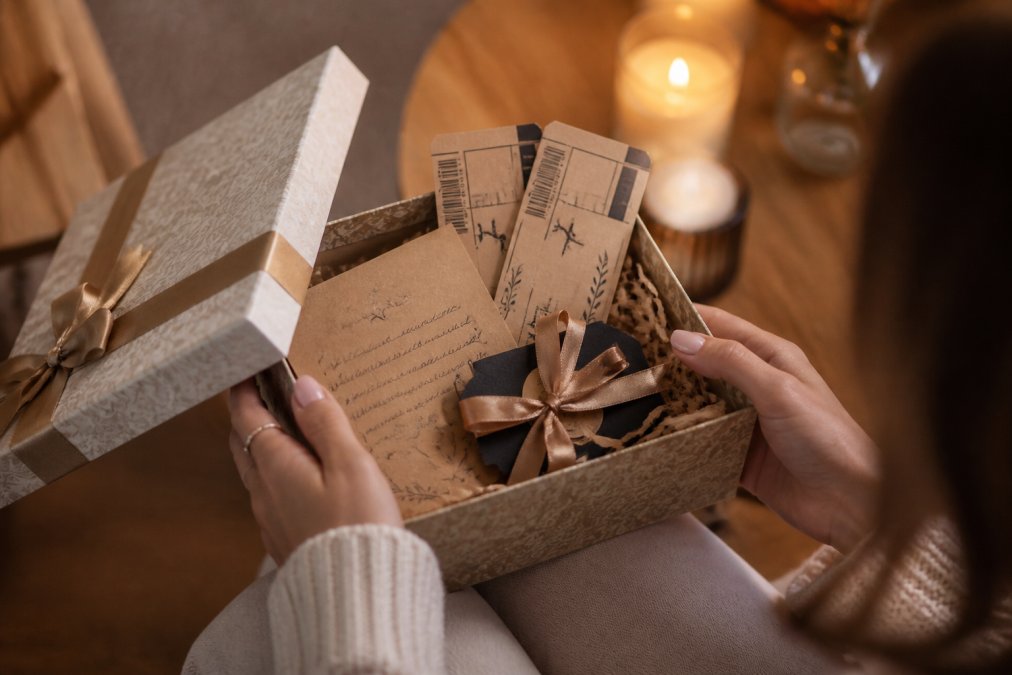
A physical representation, printed ticket, certificate, or custom box, transforms an abstract promise into concrete evidence.
Physical Representation Methods
For travel, create a "departure kit": print confirmation details, include a map or travel guide, add travel-sized snacks, and wrap together. This works especially well for surprise trips.
For events, print tickets or create a custom design in a decorative envelope. Include a handwritten note explaining why you chose this event.
For classes, design a custom certificate on quality cardstock with a personal message, date, and time. This signals you've secured their spot and handled logistics.
For subscriptions, present the first month's delivery or a "membership card" explaining what they'll receive and when. Include a calendar for the first delivery.
Digital Experience Delivery
For digital experiences, create a multi-step reveal: a physical box with a printed guide, a sealed envelope with login credentials, and a handwritten note. This makes it feel substantial rather than like a forwarded email.
Alternatively, create a "mystery experience" reveal with date, time, dress code, and a single-sentence hint. The mystery transforms gift-giving into a game.
The Reveal Moment Itself
Create a dedicated moment to present the gift. Sit down together and explain why you chose this experience, referencing something they've mentioned. This transforms it into a deeply personal gift.
For surprises, record a brief video (30 seconds to 2 minutes) explaining the experience and why you chose it. The personal touch makes it more memorable than printed details.
For group experiences, reveal details gradually: the date a week ahead, the category three days before, what to wear the day before, and full details on the day. This extends anticipation.
Coordinating with Experience Providers
Contact the venue or instructor before gift-giving and request personalized touches: a welcome email mentioning their name, a gift acknowledgment in confirmation materials, or special seating. These signal you've orchestrated a thoughtful experience.
Timing and Logistics
Present experience gifts with advance notice: 2-4 weeks for travel experiences, 1-2 weeks for local ones. For surprises, verify availability in advance.
Include practical details in writing: date, time, location, what to bring, and parking information. This removes uncertainty.
Creative Experience Gift Presentation Ideas
Transform the gift-giving moment: create a countdown calendar with daily clues, plan a surprise reveal dinner, make a custom video message, or design a custom "experience passport" booklet for them to write notes in.
Budget-Friendly Experience Gifts That Feel Thoughtful
Budget-friendly experiences abound: picnics, free museum days, community center classes, local restaurants, or self-created experiences like home-cooked meals. Subscription services offer ongoing value. What matters isn't the price tag, it's that you chose something thoughtful and created a moment worth remembering.
Personalizing Experiences to Match Your Recipient
Personalized experiences prove you understand the recipient. The difference between forgettable and treasured comes down to matching the experience to their actual preferences, not your assumptions.
Understanding Personality and Experience Preference
Matching the experience to the recipient's personality type dramatically increases the likelihood they'll genuinely enjoy it.
Introverts vs. Extroverts: Extroverts thrive in large-group activities and festivals. Introverts prefer intimate experiences: private cooking classes, one-on-one coaching, or solo adventures. Matching the experience to their social preference is crucial.
Novelty-Seekers vs. Comfort-Seekers: Novelty-seekers enjoy skydiving and international travel. Comfort-seekers prefer gentle novelty: a cooking class in a familiar cuisine or a nearby destination trip.
Active vs. Reflective: Action-oriented people enjoy hiking, rock climbing, or dance classes. Reflective people prefer museums, theater, or meditation retreats. Match the experience to how they engage.
Analytical vs. Emotional: Analytical people enjoy structured learning like coding bootcamps. Emotional processors prefer connection-centered experiences like couples' retreats or art classes.
Life Stage and Physical Considerations
Young Adults (18-35): Enjoy adventure, skill-building, and social experiences. Mid-Life Adults (35-55): Value relationship celebrations and relaxation. Older Adults (55+): Prefer cultural experiences, guided travel, and legacy-focused activities. Always consider physical limitations and accessibility.
**
Identifying True Interests vs. Assumed Interests
The most common personalization mistake is gifting based on what you think someone should enjoy rather than what they actually enjoy. Listen to what they talk about, not what you assume they'd like.
Pay attention to their actual spending and time allocation. If someone spends their free time reading, they probably don't want an outdoor adventure experience. If they're always talking about food and restaurants, a culinary experience is likely to resonate. If they mention a hobby repeatedly, that's a signal to explore experiences related to it.
Ask indirect questions. Rather than asking "What experience do you want?" (which often gets a deflecting answer), ask: "What's something you've been curious about but haven't tried?" or "If you had a free Saturday with no obligations, what would you do?" Their answers reveal genuine interests.
Notice what they consume. Do they watch cooking shows? Consider a cooking class. Do they follow travel accounts on social media? A trip to that destination might resonate. Do they listen to podcasts about a particular topic? A workshop or class related to that topic could be perfect.
Consider Their Relationship to Indulgence
Some people feel guilty spending money on themselves. They're practical, frugal, or have internalized messages that self-care is selfish.
Pairing the Experience with a Meaningful Detail
Solo vs. Shared Experiences
Testing Your Personalization
Before finalizing an experience gift, ask yourself:
- Have they mentioned this activity or something similar?
- Does this match their personality and comfort level with novelty?
- Can they physically participate in this experience?
- Is this something they would actually do, or something I think they should do?
- Does the experience tier (budget, luxury, adventure level) match their preferences?
- Would they prefer to do this alone or with someone?
Conclusion
Gifting experiences instead of physical items represents a shift toward what truly matters: memories, growth, and quality time. Whether you choose an adventure, a class, a special meal, or a quiet moment together, experience gifts celebrate the people we love in meaningful ways.
Frequently Asked Questions
Is it a good idea to gift experiences instead of physical items?
Yes. Experiences create lasting memories and social connections in ways physical goods often cannot. They reduce clutter, support minimalism, and encourage quality time with loved ones. Experiential gifts also feel more personal and thoughtful because they show you've invested effort in choosing something tailored to the recipient's interests rather than selecting a generic object.
What are some creative ways to present an experience gift?
Present experience gifts in a physical container: print event tickets and place them in a decorated box, create a custom coupon book for activities you'll do together, use a decorative card with a QR code linking to the booking confirmation, or wrap a symbolic item like a passport or hiking boot. The tangible presentation makes the intangible gift feel real and opens the door to a memorable reveal moment.
How can I gift an experience on a budget?
Budget-friendly options include free or low-cost activities like scenic hikes, picnics, cooking together, museum visits on discounted days, outdoor concerts, or staycation adventures. Subscription services often offer introductory rates. You can also create personalized experiences: a homemade dinner date, a photo walk in your neighborhood, or a themed movie night at home. The effort and thoughtfulness matter far more than the cost.
How do I make an experience gift feel personal?
Tailor the experience to the recipient's interests, hobbies, or bucket list goals. Include a handwritten note explaining why you chose this specific activity and what it means to you. Add small touches like packing snacks for an adventure or arranging a surprise element. Personalization transforms a generic activity into a meaningful gesture that shows you truly know and care about the person.


