


Table of Contents
- Essential Supplies for Personalized Jewelry Care
- Step-by-Step Cleaning Process for Personalized Jewelry
- How to Clean Engraved Jewelry Without Damaging Details
- DIY Jewelry Cleaning Tools and Methods
- How to Store Personalized Necklaces and Prevent Damage
- Professional Inspection and Maintenance Schedule
- Common Mistakes to Avoid When Caring for Personalized Jewelry
- Conclusion
Last Updated: August 6, 2026
Essential Supplies for Personalized Jewelry Care
Personalized jewelry care requires the right tools to avoid damaging engravings, precious metals, or gemstones. Gather mild dish soap, warm water, and soft-bristled toothbrushes as your foundation. A soft-bristled toothbrush reaches crevices and engraved details without scratching gold-plated pieces or sterling silver.
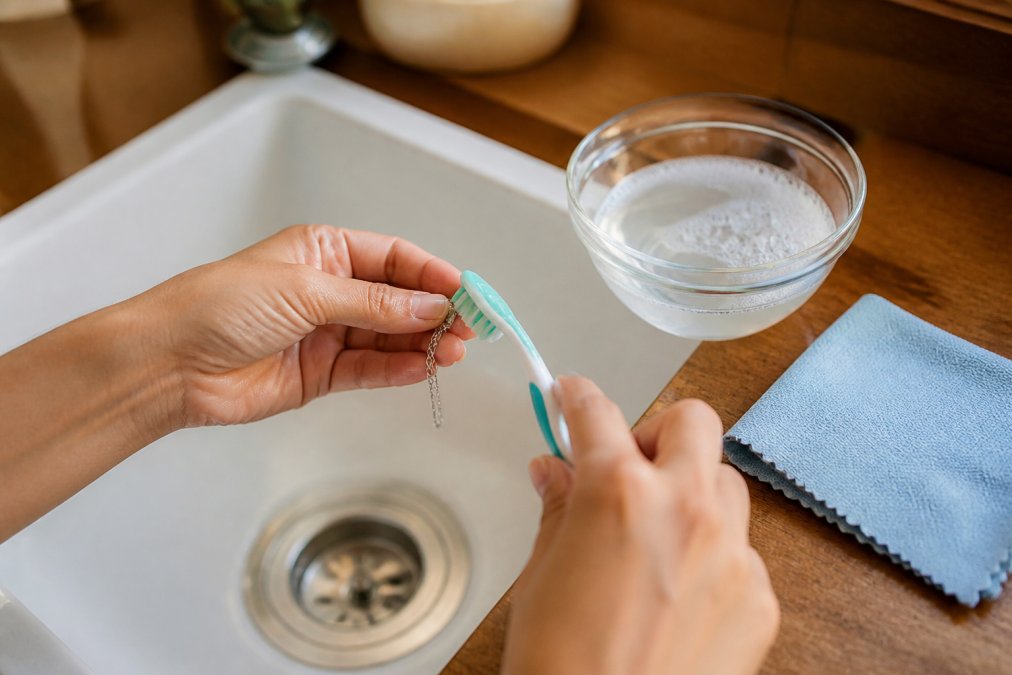
Lint-free cloths are essential, regular paper towels and cotton cloths shed fibers that get trapped in settings and engravings. Microfiber cloths work exceptionally well for drying and polishing without leaving residue.
Additional supplies include distilled water (tap water leaves mineral spots), a soft container for soaking, and anti-tarnish storage materials. Keep chemical exposure to an absolute minimum. Never use bleach, ammonia-based cleaners, or abrasive powders on personalized pieces.
Step-by-Step Cleaning Process for Personalized Jewelry
Most tarnish responds to simple, non-abrasive techniques that take 10-15 minutes per piece.
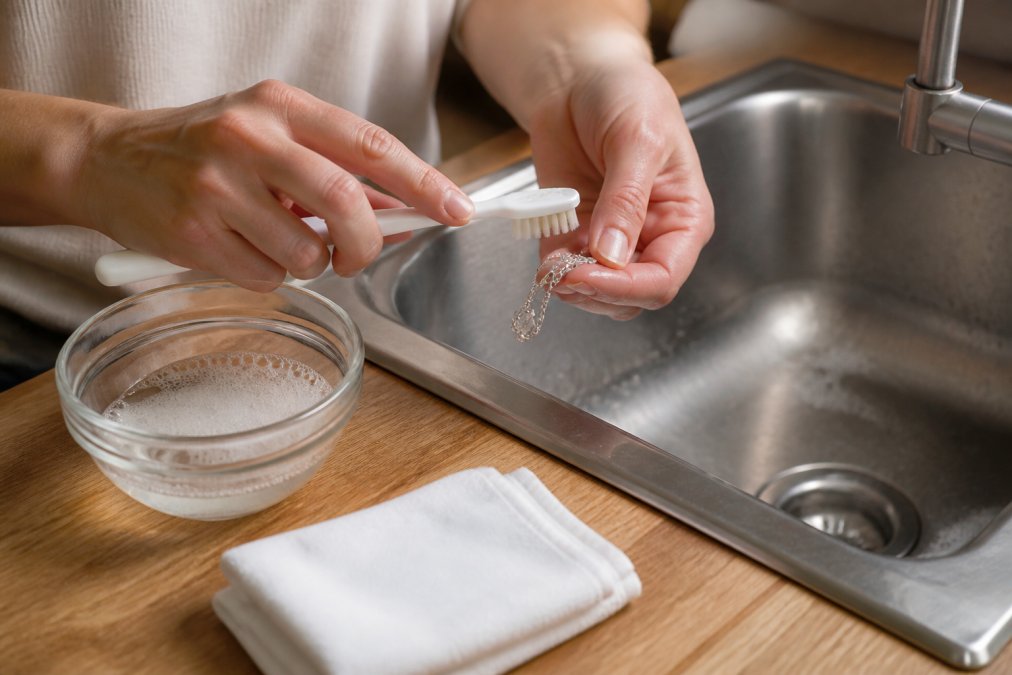
Fill a small bowl with warm water and add a few drops of mild dish soap. The water should be comfortably warm, not hot, high temperatures can loosen settings or damage plating. Submerge the jewelry and let it soak for 5 minutes to loosen surface dirt without aggressive scrubbing.
After soaking, gently brush the piece with your soft-bristled toothbrush using light, circular motions. Pay special attention to spaces between prongs, where residue accumulates. Rinse thoroughly under running distilled water until you see no soap residue. Pat dry immediately with your lint-free cloth, don't let the piece air dry, as water spots will form.
Cleaning Sterling Silver and Gold-Plated Pieces
Sterling silver responds well to the gentle soak-and-brush method. If tarnish is heavy, increase soaking time to 10 minutes, which gives the soap more time to work.
Gold-plated pieces demand extra caution. The gold layer is thin and can be damaged by aggressive brushing or harsh chemicals. Use the same soak-and-brush method but reduce brushing pressure significantly. Focus on soaking and rinsing rather than mechanical cleaning. Never use abrasive polishing cloths on gold-plated jewelry, as these remove the plating along with the tarnish.
Both types benefit from prompt drying. Water left on the surface accelerates oxidation and tarnish formation.
Removing Tarnish Safely
Light tarnish responds to the standard soak-and-brush method. For stubborn tarnish, increase soaking time to 15-20 minutes, allowing the soap to penetrate oxidized areas more thoroughly.
If soaking alone doesn't work, consider a commercial tarnish removal product specifically formulated for sterling silver. Follow product instructions carefully and test on an inconspicuous area first if the jewelry has gemstones or delicate details.
Never use aluminum foil and baking soda methods on personalized jewelry. This technique is too aggressive for delicate work and particles get trapped in crevices. The best tarnish prevention is regular maintenance, light tarnish addressed monthly takes seconds to remove.
How to Clean Engraved Jewelry Without Damaging Details
Engraved surfaces require specialized care because grooves and details are vulnerable to damage from brushing, harsh chemicals, or ultrasonic vibration.
Never use abrasive materials on engravings. When cleaning engraved areas, use your toothbrush with extremely light pressure and let the warm soapy water do the work. Gentle circular motions following the lines rather than crossing them help dislodge debris without damage.
For stubborn residue, increase soaking time rather than brush pressure. Twenty minutes of soaking followed by very gentle brushing is safer than five minutes followed by hard scrubbing. Avoid ultrasonic cleaners entirely if your jewelry has engravings, the vibration can blur fine engraving lines or cause the engraving to separate from the base metal.
After cleaning, inspect the engraving closely. If you see any changes to the detail or if lines appear less sharp, stop using aggressive cleaning methods immediately.
DIY Jewelry Cleaning Tools and Methods
A soft cotton cloth soaked in distilled water works as a gentle polishing tool for final shine. After drying with your microfiber cloth, light buffing brings out luster without harsh chemicals.
Baking soda mixed with water creates a very mild paste that can help with stubborn oxidation on sterling silver pieces without engravings or gemstones. Mix baking soda and distilled water until you have a thin paste, apply gently with your toothbrush, and rinse thoroughly. Use this sparingly and only when other methods haven't worked.
Lemon juice and salt should be avoided, the salt is abrasive and the acid can damage delicate details and certain gemstones.
Ultrasonic Cleaners: When to Use and When to Avoid
Ultrasonic cleaners work well for smooth, solid pieces without settings, engravings, or delicate gemstones. Never use them on jewelry with gemstones, especially if stones are glued rather than set with prongs. The vibration can loosen adhesive and dislodge stones.
For engraved jewelry, ultrasonic cleaners pose a specific risk. The vibration can blur engraving lines or cause the engraved detail to separate from the base metal. Most people find that the standard soak-and-brush method produces identical results without risk.
Natural Cleaning Alternatives
Plain distilled water and mild dish soap are the safest and most effective method for all types of jewelry. No additional "natural" ingredients are necessary.
Vinegar is too acidic for delicate work and can damage certain gemstones. A paste made from baking soda and distilled water is a gentler alternative to commercial polishes, but apply with extreme caution and only to sterling silver pieces without engravings.
The most effective natural method remains simple: warm distilled water, mild plant-based dish soap, a soft-bristled toothbrush, and patience.
How to Store Personalized Necklaces and Prevent Damage
Storage is where most jewelry damage occurs. The ideal location is cool, dry, and dark. Humidity accelerates tarnish and oxidation, so avoid bathrooms and basements.
Individual compartments prevent necklaces from tangling and scratching each other. A wooden jewelry box with divided sections works well. Soft cloth-lined compartments protect against scratches better than hard plastic dividers.
Anti-tarnish materials actively slow oxidation. Place anti-tarnish cloth, strips, or packets in your storage container. Replace these materials every 6-12 months as they become saturated.
Tissue paper or soft cloth separating each piece prevents metal-to-metal contact that causes scratching. Wrap each necklace loosely in acid-free tissue paper before storing.
Never store jewelry in plastic bags or airtight containers without anti-tarnish materials. Plastic can trap moisture and accelerate tarnish.
Keep necklaces unhooked when storing. Clasps put stress on the chain and can weaken the attachment point over time. Lay chains flat or coil them loosely in compartments.
Store gemstone-set jewelry separately from plain metal pieces. Harder gemstones can scratch softer metals.
Professional Inspection and Maintenance Schedule
Schedule professional inspection annually for jewelry you wear regularly. A jeweler checks for loose stones, worn prongs, damaged clasps, and structural weaknesses that could cause loss of the piece.
For special occasion jewelry worn infrequently, inspection every 2-3 years is sufficient. However, if you notice any changes in appearance or feel any looseness when wearing the piece, get it inspected immediately.
Professional cleaning is optional if you maintain your pieces regularly at home. A professional can remove tarnish that home methods can't address without risk. A professional jeweler can also assess whether engravings have been damaged and recommend restoration if necessary.
Ask your jeweler about preventative maintenance during inspection. They can apply protective coatings to sterling silver to slow tarnish, or assess whether gold plating needs renewal.
Keep receipts and documentation from professional inspections. This creates a maintenance history for your pieces and helps future jewelers understand what work has been done.
Common Mistakes to Avoid When Caring for Personalized Jewelry
Using tap water for rinsing causes visible spots on jewelry. Tap water contains minerals that crystallize as water evaporates, leaving white or cloudy residue. Distilled water eliminates this problem entirely.
Storing jewelry in humid environments accelerates tarnish faster than any other single factor. Move your storage to a cool, dry spot and watch tarnish slow dramatically.
Mixing metals in the same storage compartment causes scratching. Keep different metals separated to eliminate this damage.
Cleaning jewelry too aggressively is tempting when tarnish is heavy, but pressure and harsh chemicals cause permanent damage. Increased soaking time is always safer than increased brush pressure.
Leaving jewelry wet accelerates tarnish and oxidation. Dry immediately after cleaning to prevent most tarnish formation.
Using commercial silver dips or harsh polishes on personalized jewelry causes damage. These products are designed for plain silver and are too aggressive for delicate engravings or plated pieces.
Ignoring small signs of damage leads to bigger problems. A slightly loose stone becomes a missing stone. Small issues caught early are cheap to fix.
Storing jewelry in direct sunlight fades some gemstones and can accelerate certain types of oxidation. A dark drawer or closed jewelry box protects your pieces from light exposure.
Personalized jewelry deserves care that matches its sentimental value. Gentle cleaning, proper storage, and regular inspection are straightforward enough to become routine. Start with the supplies you already have, follow the step-by-step cleaning process, and schedule annual professional inspection. These three habits will keep your personalized jewelry looking beautiful for decades. The American Gem Society provides guidance on jewelry care and maintenance. Shop Now and invest in pieces worth caring for, then protect that investment with the right maintenance approach.
| Care Task | Frequency | Time Required | Best Method |
|---|---|---|---|
| Gentle cleaning | Every 2-4 weeks | 10-15 minutes | Soak and soft-bristled brush |
| Tarnish removal | As needed (monthly or quarterly) | 15-20 minutes | Extended soak or mild paste |
| Professional inspection | Annually | Varies | Certified jeweler |
| Storage assessment | Seasonally | 10 minutes | Check for humidity and organization |
| Anti-tarnish material replacement | Every 6-12 months | 5 minutes | Replace strips or packets |
The Smithsonian Institution's jewelry conservation guidelines emphasize the importance of preventative care over aggressive restoration. Consumer Reports on jewelry care best practices confirms that gentle, consistent maintenance outperforms occasional deep cleaning. By establishing a routine that includes regular gentle cleaning, proper storage, and professional inspection, you'll preserve the beauty and integrity of your personalized jewelry while ensuring it remains a meaningful keepsake for years to come.
Frequently Asked Questions
How do you clean personalized jewelry without ruining the engraving?
Use warm water with mild dish soap and a soft-bristled toothbrush to gently scrub around engraved details. Avoid abrasive scrubbing or harsh chemicals that can damage the engraving. Rinse thoroughly with clean water and air dry on a lint-free cloth. For delicate gemstones set in engraved pieces, skip the toothbrush and use only a damp cloth. Never use ultrasonic cleaners on engraved jewelry, as the vibrations can loosen prongs or damage the engraved surface.
Can I use an ultrasonic cleaner on custom engraved jewelry?
No, ultrasonic cleaners are not recommended for engraved jewelry. The high-frequency vibrations can damage delicate engraved details, loosen stone settings, and potentially harm the structural integrity of prongs holding gemstones. Stick to gentle hand-cleaning methods with mild dish soap and warm water for personalized pieces. Ultrasonic cleaners work well for smooth, solid pieces without engravings or delicate settings.
What is the best way to store personalized necklaces to prevent tarnishing?
Store personalized necklaces in a cool, dry place away from moisture and direct sunlight. Use a jewelry box with individual compartments or anti-tarnish cloth to prevent oxidation. Keep necklaces separate from other jewelry to avoid scratching. Store them flat or coiled loosely to prevent kinking chains. For sterling silver pieces, include anti-tarnish strips in your storage box to slow patina buildup. Avoid storing jewelry in humid bathrooms or basements where moisture promotes tarnish formation.
How often should I have my custom jewelry professionally inspected?
Have personalized jewelry professionally inspected once per year, or more frequently if worn daily. Professional inspection checks for loose prongs, worn settings, and overall structural integrity. Annual maintenance helps catch potential damage early before it becomes costly to repair. If your jewelry experiences chemical exposure from lotions, cosmetics, or perfumes regularly, consider professional cleaning every six months to maintain its appearance and protect the engraved details.
This article was written using GrandRanker


